
Dr. Stefan Uhlig (DE)
Natural climate changes
Facts based on Geological, Archaeological and Astrophysical Aspects
In times of the European Medieval, the powerful contemporaries and influencers propagated the geocentric model of the world according to which the Earth should have been located in the centre of the Universe and the Sun and the planets should have circumnavigated the Earth. A modern analogue is the current superstition that the human is provoking and can control the climate change by the anthropogenic emission of carbon dioxide.
This book presents examples of continuous natural climate changes, such as the development of the temperature of Earth’s atmosphere, the oceans’ sea levels and the ice volumes of the last few millions of years. These are explained and discussed, presenting data from different scientific areas such as geosciences, archaeology and astrophysics.
Hereby, we will see that quite complex astrophysical and heliophysical mechanisms cause the periodically recurring long- and short-term variation of climate which cannot be influenced at all by any human being, also not by any increased or reduced emission of anthropogenic carbon dioxide. Controlled by the Sun’s energy reaching the Earth’s surface, the oceans are the global player interacting with the atmosphere and dominating its temperature.
It was intended to write this book in an understandable style for everybody interested to learn more about the controversially discussed topic of climate change, or who is affected by the drastic measures of policy and want to form their own opinion. On the other hand this publication wants also to be a compact base and reference for the scientific young generation to invite them to immerse themselves into this very interesting and exciting field of natural sciences.
E-Book (Digital)

Natural climate changes
Dr. Stefan Uhlig (DE)
E-book, approx. 354 pages, 1st English-language edition (translated based on the 4th printed edition, 2024/25), 156 color illustrations, graphs, and tables, Publication date: June 4, 2026, ISBN: 978-3-907347-66-9
You can purchase the e-book at major online bookstores.
However, you can also order it directly from us. Once payment is received, we will send the e-book in EPub format to the email address you provided during the ordering process.
25,99 €
Gesamtpreis
About the author
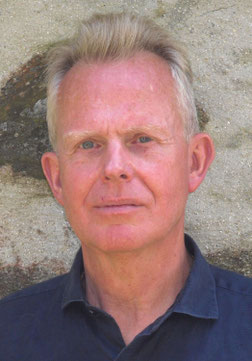
Dr. Stefan Uhlig, Geologist
Stefan Uhlig graduated in geosciences at the Technical University of Karlsruhe (Germany), specialising in applied geology and geochemistry. He worked in mining in Spain and in geoscientific projects in Mexico and Southern Africa, as well as in deep drilling projects on- and offshore. The field work for his dissertation on stratiform copper mineralisation was realised in Namibia, where he cooperated with the local Geological Survey.
Later, he worked in the field of X-ray analysis, which took him again to Latin America and to Southern Africa, among other places. He now makes his scientific findings, knowledge and experience accessible to a wider readership focusing on the late-breaking discussion on climate change.
Table of Contents
Vorwort
1. Climate – What is it?
2. Alternating Cold and Warm Periods
3. The Earth's Position in the Solar System
4. The Pulsating Sun
5. The Blue Planet – without Oceans, Climate would be different
6. The Climate and Us – not Us and the Climate!
7. Extreme Weather Phenomena
8. The Rise and Fall of Sea Level
9. The Advance and Retreat Movement of Glaciers
10. Greenhouse Effects and Gases
11. CO2 Regimes of the Past
12. The Cold Side of Volcanoes
13. What Happened to the Ozone Hole?
14. About Polar Bears and Rhinos
15. Sideshow of Small Particles
16. Climate – Quo Vadis?
Concluding Remarks
Bibliography
About the author
Introduction
The motivation for the following discussion of climate changes is based on the current emotional, irrational, ideological, and scientifically blinkered discussion and reporting, as well as the persistent association with topics of environmental protection. Geologists understand the changing climate developments of the last 500 million years of geological history very well. This leads to a rather differentiated perspective. The causes of the constant climate changes are very complex and cannot be explained with only one parameter, such as the carbon dioxide (CO2) concentration in the atmosphere. The temperature of the atmosphere has been steadily increasing since the end of the Last Ice Age around 12,000 years ago, albeit with interruptions, combined with the continuous rise in the sea level of the world's oceans. In response to steadily rising sea levels, dyke and dam construction in the Netherlands, for example, has been enforced since the High Middle Ages. This will still have to be done today in other regions of the world until the current plateau of sea-level rise has reached its maximum and then will begin to decline slowly again as the Earth cools down in the coming centuries and millennia. During the warm climatic optimum of the Atlanticum around 8,000 years ago, atmospheric temperatures were already significantly higher than today, combined with a sea level that rose much more slowly to the present than during the first millennia after the end of the Last Ice Age. It can be assumed that the Atlanticum period was the climatic heat peak of the current Holocene interglacial period, similar to the level of the last Eemian interglacial around 120,000 years ago, when sea levels were even 6-9 metres higher than today.
Our prehistoric ancestors were impressed and frightened by the then inexplicable and sometimes life-threatening weather phenomena, such as lightning, thunder, hail, and icy cold. This fear probably also gave rise to early religions during the Palaeolithic period with the belief in higher powers, such as a thunder god, to whom homage was paid as the god Thor right up to the time of the northern European Germanic peoples and who is still remembered today in our day of the week Thursday. According to tradition, Thor, the thunder god, drove his thundering chariot drawn by goats across the sky and hurled lightning bolts at the Earth with his hammer. Even after more than 300 years of spiritual enlightenment in Europe, there still seems to be a strong archaic fear of natural weather phenomena in our inner Neanderthal.
The presented discussion of climate changes is not intended to, nor cannot, replace the available scientific works. It rather aims to stimulate a more intensive and critical examination of the multifaceted topic of climate change. As will be shown, it is not sufficient to consider only the last 150-200 years of climate development after the cold period of the Little Ice Age, but one must look back over thousands and millions of years of geologic history. The development of solar radiation, plant growth, temperature, etc. shown in the following chapters and illustrations is based on interdisciplinary scientific investigations of trace elements, isotopes, pollen, microfossils, and many others in ice cores, in marine and lake sediments, soils, dripstones, and in tree rings, to name only the most essential sample types. Since one cannot directly determine the temperature and solar radiation of the past when considering previous climatic developments, i.e. in paleoclimatology, natural science makes use of indirect proxies. That is, determining for example, the temperature, precipitation or insolation sensitive properties of materials preserved from the geological past. This means investigating indicators of chemical, physical and biological processes that were influenced by temperature changes. Proxies for climate-relevant parameters include the composition of the isotopes 14C (for age determination), 10Be (for solar radiation), and 18O (for temperature evolution) in the above mentioned sample types. Plant pollen, varves (fine layered sediments), speleothems (dripstones), microfossils, and tree rings are sample types that are particularly useful for deciphering the climate evolution of the past dozens of millennia. The cosmic radiation reaching the Earth is stronger when there is reduced solar activity weakening the solar wind, which protects the Earth against the cosmic radiation. This results in a more abundant formation of isotopes on the Earth, which are therefore an indirect indication of the activity of the Sun. Higher concentrations of these isotopes are proxies for reduced solar activity. Note that the amount of these isotopes in woods, fossils, and ice cores is inversely proportional to the solar activity. All of these materials preserve very important climate archives. The different isotope-chemical methods will be explained in more detail in the subsequent chapters.
A temporal link, or complement, between paleoclimatology and current climatology is given by the historical climatology, which uses historical records, accounts, and documents to shed light on climatological developments over the past millennia. Archaeological findings, for example from Roman times, also show that sea levels rose more or less continuously even in pre-industrial times (before 1850). All of these extremely exciting, detailed single results and information, as well as detailed explanations of the most diverse methods of geoscientific metrology, are available in more detail in the publications cited at the end of the book. In the course of the present discussion of climate-determining factors, new highly interesting details were found repeatedly, similar to a detective story or a forensic search for clues, whereby the present work and the bibliography listing became considerably more comprehensive than planned. Many meaningful pieces of the climate puzzle emerged, based on precise multidisciplinary scientific research published by numerous authors. The challenge was to put these individually very specialised puzzle pieces together into a real and conclusive overall picture. Of great importance also was the study of scientific works of the last century, when research could still be done in an open-ended and open-minded way, without the current immense political and ideological pressure on the now highly explosive and extremely controversial topic of climate change. In the case of various sub-aspects of climate change, redundant observations or data sources are intended to underline that these are not singular isolated research findings, but rather that a very large number of renowned international researchers of natural sciences have recognised that, on the basis of well-founded scientific work, modern climate change is mainly based on natural causes. Studying umpteen publications was the reason to get to the bottom of better understanding the climate changes. The large listing of scientific publications at the end of this book give access to data, information, and findings in scientific journals and publications, which are not known or rarely referred to in the public arena. In the running text, only the domains are given for Internet references. The complete Internet addresses, however, are presented in the bibliography listing at the end of this book. Spatial dimensions, weights, and temperature data are presented in the European metric system and in degrees Celsius. Reported years refer to BC (before Christ), the years before Christ's birth, or AD (anno domini), the years after Christ's birth, even if current scientific publications are increasingly using the term BP (before present) or refer to years before or after CE (Common Era).
With this text it is not intended to convince, but to stimulate a critical examination of the current mainstream dialogue, according to the remarks of the Spanish philosopher José Ortega y Gasset (1883-1955) on the subject of the Essay: "... in which the teachings – even if they are scientific conviction for the author – do not demand that the reader take them in as truths. I bring here only 'modi res considerandi', possible new ways of looking at things. I call upon the reader to try out these new views to see if they are really fruitful views. Thus, the reader makes the judgment for himself alone and on the basis of his experience whether they are true or false."